
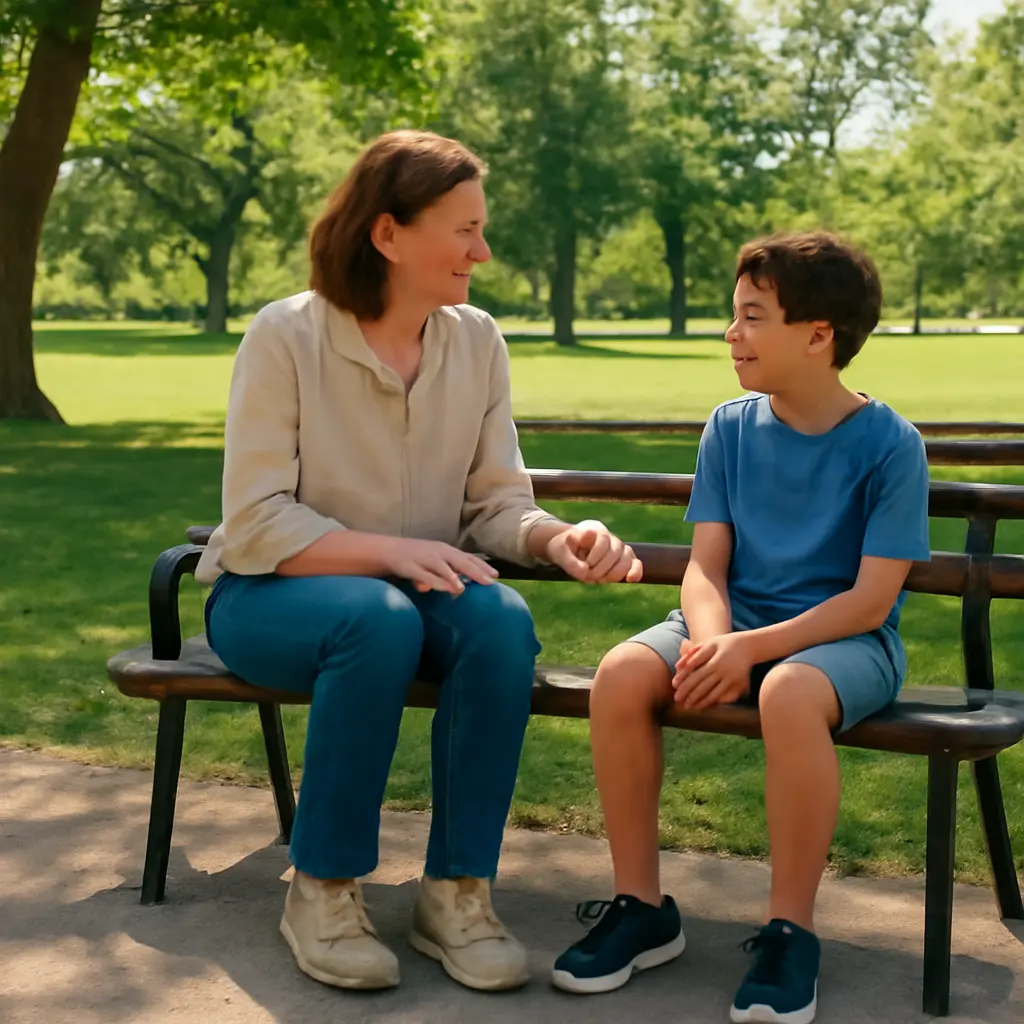
Empathy is the ability to notice and try to understand another person’s feelings and perspective. When children ask uncomfortable questions about differences—such as disability, skin color, family structure, or gender—caregivers can respond with calm, age-appropriate facts, affirm the dignity of the person being discussed, and invite respectful curiosity. This matters because children learn from adult reactions as well as explanations: research reviewed by the American Academy of Pediatrics links children’s experiences of discrimination with risks to mental and physical health, while UNICEF emphasizes that children need supportive adults to help them make sense of bias. The practical approach is to pause, answer plainly, correct stereotypes, model considerate language, and keep the conversation open.
Why empathy matters when children ask about differences
Empathy combines recognizing another person’s emotional experience with trying to understand their point of view. It does not require a child to feel exactly what someone else feels; it asks the child to treat that person as worthy of respect. In parenting, empathy is taught through repeated interactions: children observe how adults respond to unfamiliar bodies, accents, customs, and identities, then use those reactions to shape their own expectations.
The topic is relevant well before children can explain social categories. The American Academy of Pediatrics’ clinical report on racism notes that children can notice racial differences in infancy and that racial attitudes can begin developing during the preschool years. The report also describes racism and discrimination as adverse experiences associated with harmful health outcomes. These findings are a reason to speak thoughtfully—not to make children afraid to ask questions, but to give them accurate information and a clear standard of respect.
A child’s question may sound blunt because children are still learning what is private, what words are appropriate, and how to interpret what they see. A question such as “Why does that person use a wheelchair?” can be an opening to explain access and disability. A question about someone’s skin may be an opportunity to explain human variation while making clear that skin color does not determine a person’s worth, character, or abilities.
Calm, accurate answers build empathy through conversation
A calm, accurate answer is a short explanation that responds to what the child actually asked without shaming the child or reducing another person to a single trait. It combines truthful language, respect for privacy, and an invitation to learn more. UNICEF’s guidance on talking with children about discrimination recommends listening, providing honest answers suited to the child’s age, and helping children recognize unfair treatment.
Useful forms of this response include naming a visible difference neutrally, explaining an accommodation, correcting an inaccurate assumption, or telling a child that a personal detail is not theirs to demand. The best answer is usually simple enough for the child’s developmental stage and open-ended enough to support follow-up questions.
Pause and acknowledge the question
Pausing means regulating your own reaction before you answer. If a question feels embarrassing or catches you off guard, take a breath and say, “That’s a good question; let’s think about how to ask it kindly.” This communicates that curiosity is allowed while signaling that words and people deserve care. If your child has spoken loudly or pointed, gently redirect them rather than scolding them in a way that makes the person being discussed seem shameful.
Answer with plain, age-appropriate facts
An age-appropriate answer gives enough information to resolve the question without overwhelming the child. For example: “Some people use wheelchairs because walking is difficult or painful for them. A wheelchair helps them get around.” Avoid guessing about a stranger’s diagnosis or personal history. If you do not know the answer, say so and suggest finding reliable information together rather than inventing an explanation.
Correct stereotypes and protect individual privacy
A stereotype is an overgeneralized belief about a group. If a child says, “People who speak that way don’t know English,” respond with a correction: “People can speak with many accents, and an accent doesn’t tell us how much someone knows.” Distinguish between explaining a general concept and making assumptions about an individual. A person’s disability, religion, family story, or medical information may be private; children can learn that curiosity does not entitle them to personal details.
Respectful language turns curiosity into consideration
Respectful language describes people without mockery, demeaning labels, or assumptions that a difference makes someone inferior. Language preferences vary: some disabled people prefer identity-first wording, such as “autistic person,” while others prefer person-first wording, such as “person with autism.” When discussing an individual, follow their stated preference when known; otherwise, use neutral wording and avoid presenting one phrase as universally preferred.
The same principle applies to race, culture, gender, and family. Rather than relying on euphemisms that imply a trait is shameful, use ordinary, accurate terms. If your child uses a hurtful word, correct it clearly and briefly: “We don’t use that word about people. You can ask your question this way instead.” Then explain the respectful alternative.
Model language for disability and visible differences
When a child notices a mobility aid, hearing device, birthmark, or other visible difference, describe it neutrally and focus on the person’s autonomy. For instance: “That is a hearing aid. It helps some people hear sounds.” If the child asks whether they may help, explain that they should ask first and accept the person’s answer. Do not touch someone’s mobility aid or assistive device without permission; these are part of that person’s personal space and independence.
Discuss race and culture without ranking people
Children may notice differences in skin tone, hair, clothing, food, language, or celebrations. You can name these differences without suggesting that one group is the default: “People have different skin colors because of inherited traits, and every skin color is normal.” For cultural questions, explain that practices differ among families and communities, and that no one person represents an entire culture. UNICEF advises adults to address discrimination directly rather than relying on silence to teach fairness.
Talk about gender and family diversity with respect
Families may have one parent, two parents, grandparents as caregivers, adoptive parents, or parents of different genders. A simple answer might be: “Families can be made in different ways, and what matters is that people care for one another.” If a child asks about someone’s gender, teach them to use the name and pronouns that person shares, and avoid asking strangers intrusive questions. Keep the focus on treating people fairly rather than turning someone into a lesson without their consent.
Practice empathy with questions, examples, and repair
Empathy grows through practice, not a single perfect conversation. After answering, ask what the child thinks or whether they have another question. This helps you discover whether they are confused, repeating something they heard, or worried about how to act. The goal is not to demand a particular emotion; it is to help children connect knowledge with considerate behavior.
Use perspective-taking without demanding that someone explain themselves
Perspective-taking means considering how a situation might feel from another person’s point of view. Ask, “How might it feel if people stared or made guesses about you?” Then add that no one has to disclose personal information to satisfy another person’s curiosity. Books, stories, and conversations about varied lives can help children explore perspectives without placing the burden of teaching on a stranger or classmate.
Teach children what to do when they make a mistake
Children will sometimes use the wrong word or ask a question in an unkind way. Teach a brief repair: stop, listen, apologize without making excuses, and try again with more respectful language. For example, “I’m sorry I said that. What is a better way to ask?” Adults can model the same process when they make a mistake, showing that accountability is more useful than defensiveness.
Respond when a child witnesses or experiences bias
If a child reports a discriminatory comment, listen carefully, affirm that the behavior was not okay, and ask what support they need. Avoid dismissing the experience or asking the child to prove that harm occurred before you take it seriously. UNICEF recommends helping children identify discrimination and seek support from trusted adults. If the incident occurs at school or in another organized setting, document what happened and contact the appropriate responsible adult or institution.
A practical response for uncomfortable questions
A parent at a playground might hear a child ask why another child communicates with a device. A helpful response is: “That device helps them communicate. People use different ways to share what they think. We can say hello, and we should let them decide whether they want to talk.” This answer supplies a fact, recognizes the other child’s agency, and offers a respectful next step without demanding a personal explanation.
For questions that cannot be answered privately or accurately in the moment, use a simple bridge: “That’s something personal, so we won’t ask them about it. We can learn about the general topic later.” This both sets a boundary and keeps learning possible. If your first response is imperfect, revisit the conversation: “I was surprised earlier and didn’t explain that well. Here’s what I meant.”
Conclusion: everyday answers make empathy observable
Calm, accurate answers help children understand differences; respectful language helps them discuss those differences without demeaning people; and practice in perspective-taking, privacy, and repair turns empathy into action. Research and guidance from the American Academy of Pediatrics and UNICEF reinforce why adults should address bias directly and support children with honest, developmentally appropriate conversations.
When your child asks an uncomfortable question, pause, answer what you know, correct harmful assumptions, and keep the conversation open. Explore children’s books and guidance from trusted pediatric and child-rights organizations, and look for everyday opportunities to model respect. The aim is not to eliminate curiosity; it is to teach children to pair curiosity with care.
Sources: American Academy of Pediatrics, “The Impact of Racism on Child and Adolescent Health,” Pediatrics, 2019, https://publications.aap.org/pediatrics/article/144/2/e20191765/38502/The-Impact-of-Racism-on-Child-and-Adolescent; UNICEF, “How to Talk to Your Children About Discrimination,” https://www.unicef.org/parenting/talking-to-your-children-about-discrimination