
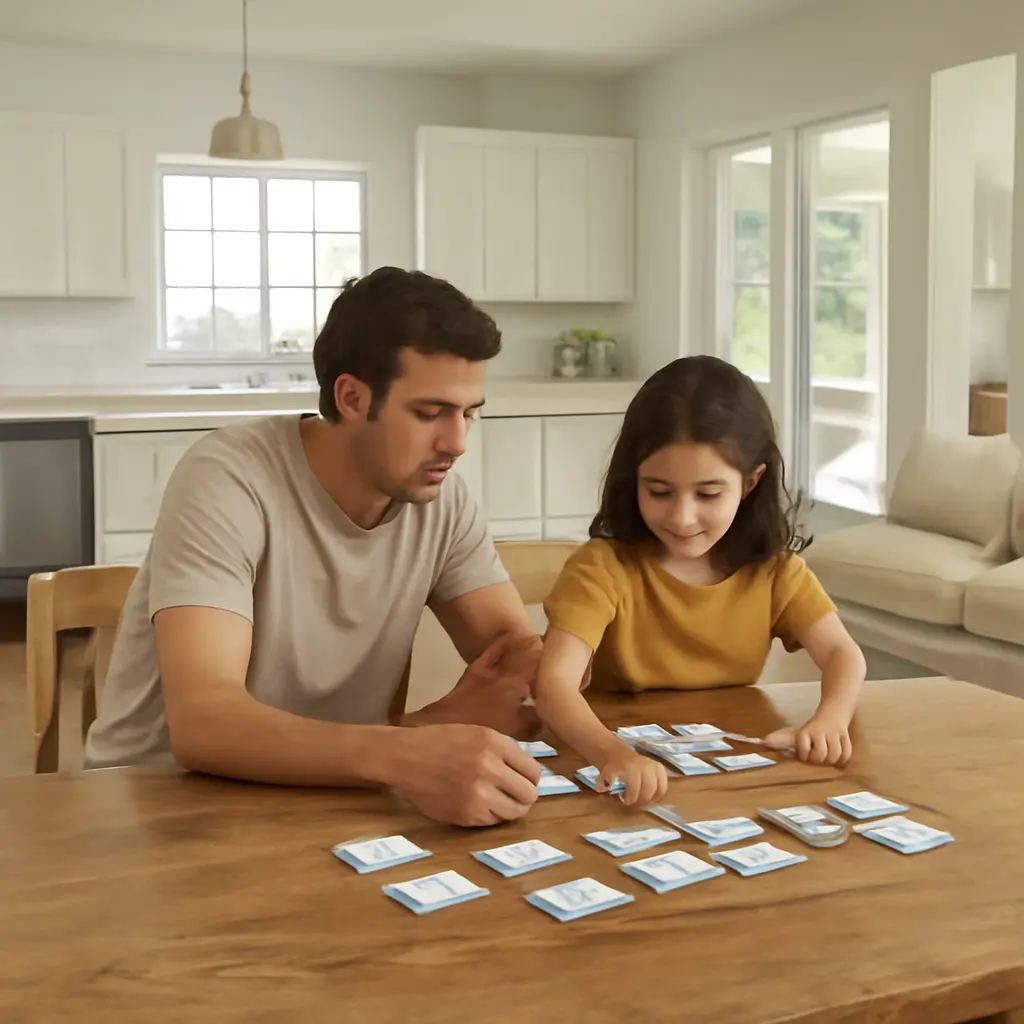
Children who see the world differently—whether because of autism, ADHD, dyslexia, sensory differences, or another form of neurodivergence—often bring distinctive ways of noticing, thinking, and connecting. Their strengths are not guaranteed by a diagnosis, and each child is an individual; they become more visible when adults understand the child’s needs and make room for their interests, communication, and perspective. Research on neurodiversity, inclusive education, and child development supports a practical message: raising a child who thinks or learns differently can deepen a family’s empathy, flexibility, and appreciation of human variation, while also calling for appropriate support. This article explains what neurodiversity means, how strengths can emerge, what parents can do at home and school, and why evidence-informed support matters.
Neurodiversity and the strength of seeing the world differently
Neurodiversity is the idea that differences in how people think, learn, communicate, and process sensory information are part of natural human variation. The term does not mean that every difference is easy, or that disability and support needs should be overlooked. It encourages families to recognize both a child’s capabilities and the barriers that can make everyday life harder.
Sociologist Judy Singer, who helped popularize the term in the late 1990s, used neurodiversity to describe variation in human neurology and to argue against treating all neurological differences simply as defects. In current practice, the word is used broadly, while particular conditions—such as autism, ADHD, and dyslexia—have their own diagnostic criteria and support considerations.
The scale of this topic makes it relevant to many families. The U.S. Centers for Disease Control and Prevention reported that about 1 in 36 eight-year-old children in its 2020 monitoring sites had been identified with autism. The CDC’s 2022 National Survey of Children’s Health estimated that approximately 11.3% of U.S. children aged 3–17 had ever received an ADHD diagnosis. These figures describe identified diagnoses in particular populations and years; they are not measures of a child’s potential or a prediction of what any one child will achieve.
Neurodivergence is not one single experience
Neurodivergence is an umbrella term, not a single medical diagnosis. It may refer to autism, ADHD, dyslexia, dyspraxia, Tourette syndrome, and other differences, though people do not always use the term in the same way. Two children with the same diagnosis may have very different communication styles, interests, sensory needs, and support requirements.
A useful family starting point is to ask what helps this child participate and feel understood rather than assuming a label tells the whole story. The National Institute of Mental Health describes autism as a developmental condition that can involve differences in social communication and interaction, alongside restricted or repetitive behaviors or interests. Those features vary in form and support needs; they do not erase a child’s personality, relationships, or individual abilities.
Strengths and support needs can coexist
A strengths-based view recognizes abilities without romanticizing disability. A child may show deep knowledge about a favorite subject, careful attention to detail, originality, persistence, or a strong sense of fairness, while also needing help with transitions, reading, emotional regulation, communication, or sensory overload. These patterns are possibilities, not traits that every neurodivergent child will share.
The National Academies of Sciences, Engineering, and Medicine has emphasized that autistic people are diverse and that services should respond to individual strengths, needs, and circumstances. This distinction matters: celebrating a child should not become a reason to deny assessment, accommodations, therapy, assistive technology, or other supports the child wants or needs.
How a child’s different perspective can strengthen family life
When parents treat a child’s behavior as information rather than simply defiance, they can learn what a situation demands and where it creates friction. A meltdown, withdrawal, or refusal may reflect distress, fatigue, sensory overload, uncertainty, or a task that is inaccessible—not a deliberate attempt to make family life difficult. Understanding the cause does not remove boundaries; it helps adults choose responses that teach and support rather than escalate.
This shift can lead families to communicate more clearly, plan transitions, reconsider assumptions about eye contact or “good” behavior, and notice environments that are unnecessarily difficult. The World Health Organization describes disability as arising from interactions between a person’s health condition and environmental and personal factors. In everyday family terms, that means changing the setting—such as reducing noise or making instructions more explicit—can sometimes improve participation without trying to change who the child is.
A deeper practice of empathy and perspective-taking
Empathy in parenting means taking a child’s reported experience seriously, even when an adult does not experience the same stimulus or challenge. A bright supermarket, scratchy clothing, an abrupt change of plan, or an ambiguous instruction may feel very different to a child than it does to a parent. Listening closely can help adults distinguish a skill the child is still developing from a demand that is overwhelming or unclear.
Parents can make empathy practical by describing what they observe, offering choices where possible, and asking what would make a situation easier. Instead of assuming a child is “not paying attention,” for example, an adult might check whether the instruction was too long, whether background noise interfered, or whether the child needs a visual reminder. This kind of curiosity preserves the relationship while helping the family identify workable solutions.
Creativity, focus, and interest-led learning
A strong interest can become a route into learning, connection, and confidence. A child fascinated by trains might practice reading through timetables, mathematics through travel distances, or conversation through sharing a carefully chosen fact. Interest-led learning does not mean that a child should only do preferred activities; it means adults can use motivation as a bridge toward new skills and experiences.
Research reviews have found that many autistic people report highly focused interests, though their intensity and effects differ. These interests can support enjoyment and expertise, but can also compete with sleep, schoolwork, or other needs if a child has difficulty shifting attention. A collaborative plan—clear transition warnings, a visual schedule, and an agreed time to return to the interest—can protect both enthusiasm and daily routines.
Resilience through problem-solving, not forced toughness
Resilience is the capacity to adapt with support; it is not a demand that a child endure avoidable distress. Families often become skilled at testing small changes: breaking a task into steps, allowing extra processing time, rehearsing a new routine, or offering a quiet space. When a strategy works, the child gains a tool and the family learns more about the conditions that support success.
The National Academies’ work on autism services stresses the importance of individualized, evidence-informed support and coordination across settings. That principle applies beyond autism: a strategy should be judged by whether it improves the child’s access, well-being, communication, or participation—not by whether it makes the child appear more typical.
Ways parents can nurture strengths while meeting real needs
A supportive home is not one that eliminates every challenge. It is one where expectations are understandable, accommodations are available, and adults keep adjusting when a strategy is not working. Parents can combine high regard for a child’s individuality with practical structure and professional guidance.
Notice patterns before choosing a solution
Observation helps families identify what happens before, during, and after a difficult moment. Parents might note the time of day, noise level, task demands, recent changes, hunger, sleep, and what helped the child recover. A simple record can reveal patterns that memory alone misses and can make discussions with teachers, pediatricians, or therapists more specific.
This is not a substitute for professional assessment. If a child’s difficulties affect learning, relationships, daily functioning, or emotional well-being, families can discuss concerns with a pediatrician, school-based professional, or qualified specialist. Early evaluation can clarify needs and open access to supports; the appropriate route depends on the child, location, and service system.
Make routines predictable and communication accessible
Predictability can reduce the mental effort required to navigate transitions. Families can use short, concrete instructions; visual schedules; advance notice of changes; and a consistent place for important belongings. For some children, spoken language is not the easiest way to express needs, so gesture, writing, pictures, communication boards, or speech-generating devices may be useful.
The American Speech-Language-Hearing Association recognizes augmentative and alternative communication (AAC) as a range of communication methods, from gestures and picture boards to devices that produce speech. AAC is not limited to children who have no speech, and using it does not mean giving up on spoken-language development. A speech-language pathologist can help identify suitable options and support the child’s communication across home and school.
Adapt sensory environments and protect recovery time
Sensory differences describe variations in how a person responds to sound, light, touch, movement, taste, or other input. A child who is sensitive to noise may find a crowded birthday party exhausting; another child may seek movement to stay regulated. Families can experiment with practical adaptations such as headphones, softer lighting, clothing choices, quiet breaks, or a predictable exit plan.
The National Institute for Health and Care Excellence’s autism guidance advises considering environmental adjustments, including lighting and noise, when supporting autistic children and young people. Sensory strategies should be individualized and reviewed with the child. A quiet break should be available as support, not used as punishment or a way to exclude the child from family and community life.
Build a strengths-based partnership with school
A productive school partnership describes both what the child can do and what conditions help them learn. Parents can share successful routines, communication preferences, sensory triggers, interests, and early signs of overload. In return, they can ask the school how it will provide access to instruction, support participation, and communicate progress.
In the United States, eligible students may receive special education and related services through an Individualized Education Program under the Individuals with Disabilities Education Act, while Section 504 of the Rehabilitation Act may provide accommodations for eligible students. These are distinct legal frameworks, and eligibility depends on individual circumstances. Families outside the United States should consult their local education authority or disability advocacy organization about relevant rights and services.
What the evidence can—and cannot—say about neurodivergent strengths
Research supports recognizing variation and tailoring environments, but it does not justify sweeping claims that every neurodivergent child has a particular gift. The same diagnosis can be associated with very different profiles, and strengths can be obscured by unmet needs, inaccessible settings, stress, or co-occurring conditions. The most reliable approach is to learn about the individual child and ask what outcomes matter to them.
Avoid the “superpower” stereotype
Calling a child’s difference a superpower may be intended as encouragement, but it can create pressure to excel or make a child feel that struggles are unwelcome. Not every autistic child has exceptional memory; not every child with ADHD is unusually creative; and not every dyslexic child has a special visual talent. Strength-based language is most respectful when it describes something the child actually enjoys or does well, without requiring them to compensate for difficulties.
The CDC’s autism surveillance statistics show why accurate context matters: prevalence estimates describe how many children were identified in a defined population, not a uniform set of traits. Similarly, ADHD diagnosis figures do not tell us whether an individual child is energetic, inattentive, impulsive, or affected in a particular way. Statistics can explain the scale of a subject, but they cannot replace listening to a child.
Use evidence-informed support and monitor outcomes
Evidence-informed care combines research, professional expertise, and the child’s and family’s circumstances and preferences. Before adopting an intervention, parents can ask what goal it targets, what evidence supports it, how progress will be measured, what risks or burdens it carries, and whether the child’s assent and comfort are considered. Be cautious of claims of guaranteed cures, secret methods, or treatments that advise stopping established medical or educational care without qualified guidance.
A useful measure of progress is not simply whether a child masks differences or complies more often. Families can also track communication, independence, stress, sleep, access to learning, friendships, and the child’s own sense of safety and agency. If a strategy increases distress or does not help with its stated goal, it is reasonable to revisit it with the relevant professionals.
Conclusion: Raising children who see the world differently benefits everyone
Neurodiversity describes natural variation in how people think, learn, communicate, and experience the world; it does not erase disability or make every child’s needs the same. A child’s distinctive perspective can invite a family to practice empathy, use interests as pathways to learning, and solve problems more thoughtfully. Those strengths become meaningful when they are recognized alongside the supports a child needs.
Parents can begin by observing patterns, asking the child what helps, adapting routines and environments, and building a collaborative relationship with school and qualified professionals. Use population statistics as context, not as a template for an individual. For further guidance, consult reputable public-health and education agencies, seek assessment when concerns affect daily life, and explore organizations led by people with the relevant lived experience. Above all, make space for the child to be understood as a whole person—not a diagnosis, a challenge to fix, or a supposed superpower.
Sources: Centers for Disease Control and Prevention, “Prevalence and Characteristics of Autism Spectrum Disorder Among Children Aged 8 Years—Autism and Developmental Disabilities Monitoring Network, 11 Sites, United States, 2020,” https://www.cdc.gov/mmwr/volumes/72/ss/ss7202a1.htm; Centers for Disease Control and Prevention, “Data and Statistics on ADHD,” https://www.cdc.gov/adhd/data/index.html; National Institute of Mental Health, “Autism Spectrum Disorder,” https://www.nimh.nih.gov/health/topics/autism-spectrum-disorders-asd; National Academies of Sciences, Engineering, and Medicine, “The Promise of Adolescence: Realizing Opportunity for All Youth” and autism-related reports, https://nap.nationalacademies.org/; World Health Organization, “International Classification of Functioning, Disability and Health (ICF),” https://www.who.int/standards/classifications/international-classification-of-functioning-disability-and-health; American Speech-Language-Hearing Association, “Augmentative and Alternative Communication (AAC),” https://www.asha.org/public/speech/disorders/aac/; National Institute for Health and Care Excellence, “Autism spectrum disorder in under 19s: support and management,” https://www.nice.org.uk/guidance/cg170; U.S. Department of Education, “Individuals with Disabilities Education Act,” https://sites.ed.gov/idea/; U.S. Department of Education, “Protecting Students With Disabilities,” https://www.ed.gov/laws-and-policy/civil-rights-laws/disability-discrimination/protecting-students-with-disabilities.