
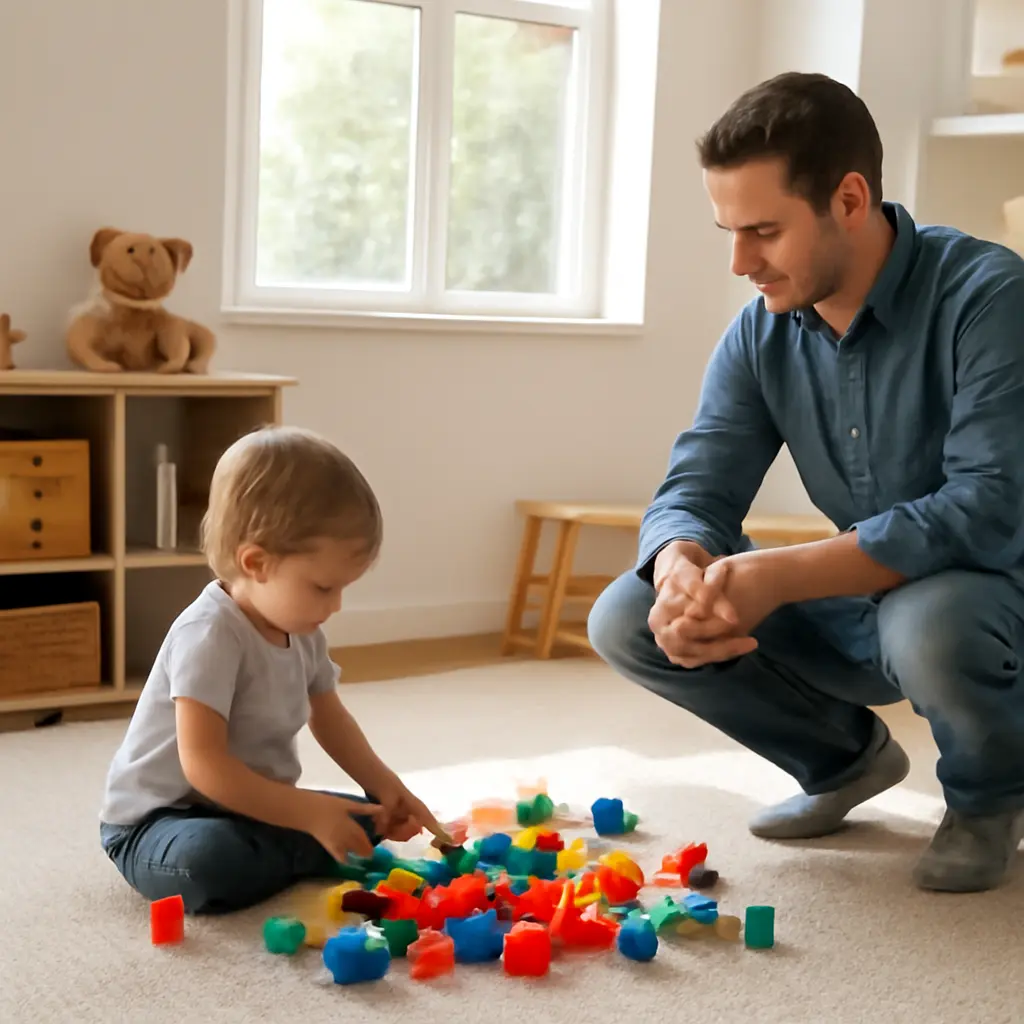
Children often reveal what they prefer before they can explain why: one may return to building, another to music, movement, pretend play, or time with other people. These early patterns are clues, not fixed destinies. Research on temperament and child development shows that children differ in their typical emotional reactions, activity levels, attention, and social approaches, while supportive experiences help those tendencies develop. Parents can miss the clues when they mistake compliance for enthusiasm, compare siblings, or steer children toward familiar definitions of success. Noticing repeated choices—without labeling or pressuring a child—can help adults offer better-fitting opportunities while preserving room for change.
Early preferences and children’s emerging traits
“Natural preferences” is a useful everyday phrase, not a formal diagnosis or a single scientific construct. In developmental research, nearby concepts include temperament, interests, motivation, and person–environment fit. The American Psychological Association describes temperament as characteristic patterns of emotional reaction and self-regulation that are influenced by biology and experience. A preference, by contrast, is an observed tendency to choose one activity, object, or social setting over another.
The distinction matters: repeated choices can offer information, but they do not prove that a child has an inborn talent or an unchangeable personality. A child’s apparent preference may reflect temperament, access, familiarity, culture, current development, or the way adults organize activities. Early patterns are best treated as hypotheses to explore rather than predictions to lock in.
Temperament: a starting point, not a verdict
Temperament refers to relatively consistent differences in how children respond to the world—for example, how readily they approach something unfamiliar, how intensely they react, or how long they persist. It can influence which environments feel comfortable, but it does not determine what a child will become. A cautious child may enjoy a new activity after watching first; an energetic child may concentrate deeply when an activity involves movement.
Researchers Alexander Thomas and Stella Chess helped establish the study of temperament in childhood. Their longitudinal New York Longitudinal Study followed 141 children from infancy, demonstrating that early behavioral styles can be described and that the match between a child’s characteristics and the environment matters. The study is historically influential, but its categories should not be used as rigid labels for every child.
Interests and motivation: what children choose and return to
An interest is a developing orientation toward a topic or activity; motivation concerns the reasons and energy behind participation. A child who repeatedly asks how things work may be exploring science, but may also simply enjoy conversation or taking objects apart. Look for recurrence across time and settings, and notice whether the child chooses the activity when adults are not directing it.
The National Association for the Education of Young Children emphasizes that play supports learning and that educators can use children’s questions and activity choices to guide responsive teaching. This does not mean every favorite pastime must become a lesson. It means adults can use a child’s curiosity as an invitation to provide materials, conversation, and opportunities to try more.
Why parents miss early preference signals
Children’s preferences are easiest to overlook when adults interpret behavior through their own expectations. A quiet child may be assumed to lack confidence; a physically active child may be seen as inattentive; a child who changes interests may be described as inconsistent. Yet behavior can have many explanations, and a preference is not necessarily a skill, a career plan, or a request for intensive instruction.
Adult expectations can obscure a child’s choices
Parents may give more attention to activities they value, recognize, or had hoped to share with their child. They may also interpret a child’s temporary enthusiasm as proof of exceptional ability—or dismiss a less familiar interest as a phase. Both responses can distort the evidence. The more useful question is not “What is this child meant to be?” but “What does the child choose, enjoy, and continue exploring under different conditions?”
The National Academies’ report Parenting Matters describes parenting as a process shaped by children’s characteristics, family circumstances, and broader social context. In practice, that means an adult’s reading of a child is never separate from time, stress, resources, and expectations. Observing without rushing to interpret can reduce the influence of those pressures.
Compliance is not the same as enthusiasm
A child may participate because an adult asks, because a sibling is involved, or because stopping would cause conflict. Conversely, a child may love an activity but avoid it in a noisy group or when the task feels too difficult. Participation alone is therefore weak evidence of preference. Notice whether the child shows initiative, returns voluntarily, asks questions, or seems absorbed—not only whether the child follows directions.
Motivation research distinguishes between doing something for an external reward or pressure and engaging because the activity feels interesting or satisfying. In their review of self-determination theory, psychologists Richard Ryan and Edward Deci describe autonomy, competence, and relatedness as important conditions for high-quality motivation. Offering meaningful choices and encouragement can help; turning every interest into a performance goal can undermine enjoyment.
Comparison and premature labels narrow the picture
Comparing siblings or classmates can make ordinary differences appear like deficits or specializations. Children also develop unevenly: a child may be verbally advanced but still need support with frustration, or socially confident but reluctant to perform in front of a crowd. Labels such as “the artist,” “the shy one,” or “the athletic one” may describe a moment, but repeated labeling can make it harder for a child to experiment beyond that role.
The U.S. Centers for Disease Control and Prevention recommends tracking developmental milestones while remembering that children develop at different rates. Milestone resources are useful for identifying when to seek professional guidance; they are not tools for ranking children or forecasting their future interests.
How to recognize preferences without boxing children in
A balanced approach combines observation with opportunity. Parents can watch for patterns, offer varied experiences, and let children respond without treating each choice as permanent. This approach respects individual differences while recognizing that interests often emerge through exposure and practice.
Look for repeated patterns across ordinary moments
For a few weeks, notice what a child chooses during unstructured time, what prompts questions, and which activities the child revisits after a break. Record context as well as behavior: a child might build alone at home but enjoy collaborative projects with a familiar friend. A simple note—“returned to the blocks three times this week”—is more informative than a sweeping conclusion such as “future engineer.”
-
Notice spontaneous choices as well as participation in adult-organized activities.
-
Look for signs of interest, such as concentration, questions, experimentation, and voluntary return.
-
Consider practical factors: fatigue, sensory demands, access to materials, and whether the child feels competent.
-
Ask open questions, such as “What part did you like?” rather than “You loved that, right?”
Offer variety, then let the child set the pace
Children cannot develop an interest in an experience they have never had the chance to encounter. Provide low-pressure access to different kinds of play and learning—stories, music, outdoor exploration, making, movement, puzzles, and social play—while keeping expectations realistic. A brief tryout, library visit, shared activity, or borrowed kit may reveal more than an expensive long-term commitment.
If a child declines an unfamiliar activity, the first response need not be to withdraw the opportunity forever. Some children need time to watch, ask questions, or try alongside a trusted adult. Respecting hesitation while keeping the door open is different from forcing participation.
Support growth without making every interest a test
When a child shows sustained interest, adults can provide appropriate materials, time, instruction, and encouragement. Praise strategies and effort—“You tried a new way to make it balance”—rather than making fixed claims about identity or talent. Leave room for boredom and change: an interest can be meaningful even if it lasts for only a season.
A child’s preference also does not replace developmental or educational support. If concerns involve communication, learning, behavior, or emotional well-being, discuss them with a pediatrician, teacher, or qualified specialist. Observation can help describe what happens; it cannot diagnose a developmental condition.
Conclusion: notice the signal, preserve the possibility
Early preferences are recurring clues shaped by temperament, interest, motivation, opportunity, and context—not fixed instructions about a child’s future. Parents can miss them when they equate compliance with enjoyment, impose adult expectations, or compare children too narrowly. Careful observation, varied low-pressure experiences, and support for autonomy offer a better response: take a child’s choices seriously without turning them into a permanent label.
For further guidance, families can consult developmentally informed resources from the CDC and the National Association for the Education of Young Children, and raise specific concerns with a pediatric professional. The goal is not to discover a child’s destiny early. It is to help each child feel seen while keeping many paths open.
Sources: American Psychological Association, APA Dictionary of Psychology, “Temperament,” https://dictionary.apa.org/temperament; Thomas, A. and Chess, S., “Temperament and Development,” Brunner/Mazel, 1977, https://psycnet.apa.org/record/1977-25763-000; National Association for the Education of Young Children, “Developmentally Appropriate Practice,” https://www.naeyc.org/resources/position-statements/dap; National Academies of Sciences, Engineering, and Medicine, Parenting Matters: Supporting Parents of Children Ages 0–8, 2016, https://doi.org/10.17226/21868; Ryan, R. M. and Deci, E. L., “Self-Determination Theory and the Facilitation of Intrinsic Motivation, Social Development, and Well-Being,” American Psychologist, 2000, https://doi.org/10.1037/0003-066X.55.1.68; U.S. Centers for Disease Control and Prevention, “CDC’s Developmental Milestones,” https://www.cdc.gov/act-early/milestones/.