
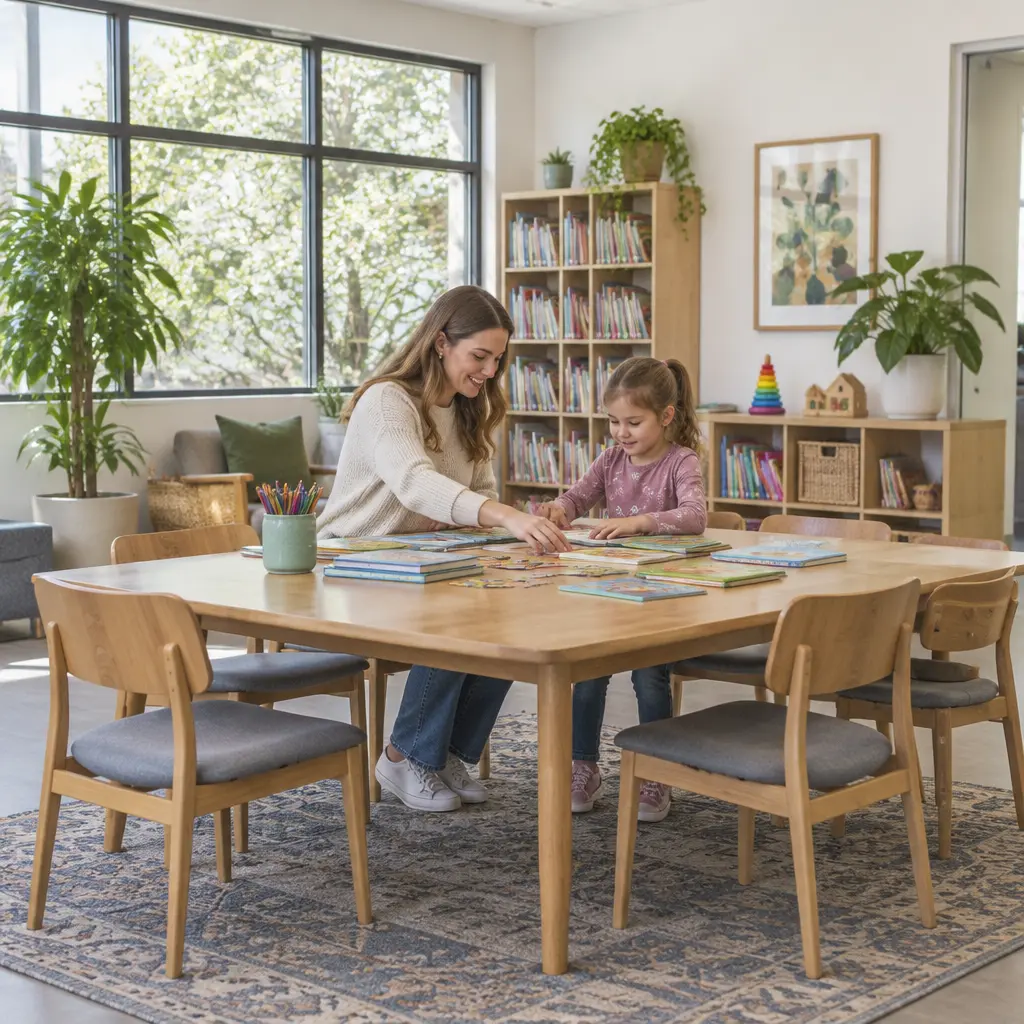
Inclusive parenting is an approach to raising children that respects their identities, accommodates their needs, and helps them participate and feel valued in family and community life. It matters because children develop within relationships and environments that can either support or restrict their well-being. The World Health Organization estimates that about one in six people worldwide experience significant disability, while U.S. surveys also document substantial diversity in family structures and children’s identities. Inclusive parenting therefore goes beyond teaching tolerance: it involves everyday choices about accessibility, belonging, representation, communication, and protection from discrimination.
Inclusive parenting: definition and core principles
There is no single universal clinical definition of “inclusive parenting.” In practice, the term describes caregiving that recognizes children as individuals, responds to their developmental and access needs, and avoids treating one identity, ability, culture, or family structure as the default. It draws on established principles in child development and human rights, including children’s dignity, participation, safety, and right to education.
The United Nations Convention on the Rights of the Child states that children should be protected from discrimination and have their views considered in matters affecting them. Inclusive parenting translates those principles into family life: caregivers listen, adapt routines where needed, set appropriate boundaries, and help children build skills and agency. The aim is not to remove every challenge or make every child’s experience identical. It is to reduce avoidable barriers while supporting each child’s growth.
The idea includes several connected practices: affirming a child’s identity, making home and activities accessible, discussing difference respectfully, and advocating for fair treatment. These practices overlap, but each addresses a distinct way children may experience exclusion.
Identity-affirming parenting
Identity-affirming parenting means responding to a child’s culture, language, race, religion, gender, or other aspects of identity with respect rather than shame or pressure to hide. It includes learning how a child describes themself, using respectful language, and making room for questions and changing understanding as the child grows. Affirmation does not require caregivers to know everything; it does require curiosity, willingness to listen, and repair when a mistake causes harm.
For LGBTQ+ children and adolescents, family support is one important part of a broader environment that affects mental health. The U.S. Centers for Disease Control and Prevention’s 2023 Youth Risk Behavior Survey found that 3.3% of surveyed U.S. high school students identified as transgender and 2.2% questioned whether they were transgender. The survey also found that transgender and questioning students reported higher levels of violence and poor mental-health outcomes than cisgender students. These findings concern population-level patterns; they do not predict an individual child’s experience, but they underscore why respectful communication and safety matter.
Disability-inclusive and neurodiversity-affirming parenting
Disability-inclusive parenting recognizes that disability can involve both a person’s specific support needs and barriers created by environments, attitudes, or inaccessible systems. Neurodiversity-affirming parenting similarly respects differences in how children communicate, learn, sense, and regulate while providing support for distress, daily tasks, and development. Neither approach means ignoring disability-related challenges. It means distinguishing the child’s worth from the difficulty and adapting expectations or surroundings instead of relying only on correction.
The World Health Organization’s 2022 global report estimates that 1.3 billion people—about 16% of the world’s population—experience significant disability. For families, practical inclusion might mean providing visual schedules, sensory breaks, communication devices, step-free access, or additional time to complete routines. Supports should be tailored with the child and, where appropriate, qualified professionals; a strategy that helps one child may not suit another.
Culturally responsive and family-inclusive parenting
Culturally responsive parenting treats a child’s cultural background, language, traditions, and community relationships as meaningful parts of family life. Family-inclusive parenting also respects varied household structures, such as single-parent, adoptive, blended, kinship, foster, and same-sex-parent families. In practice, caregivers can ask children which traditions matter to them, maintain meaningful connections with relatives and community, and avoid suggesting that a family is less legitimate because it differs from a narrow ideal.
The U.S. Census Bureau’s 2023 American Community Survey reported that about 1.25 million same-sex couple households lived in the United States. That number describes households, not all LGBTQ+ parents or family arrangements, but it illustrates why inclusive language and representation matter in schools, health services, and children’s books. Respectful inclusion also means not asking a child to speak for an entire culture or group.
Inclusive parenting supports belonging, development, and safety
Once inclusion is understood as a set of everyday practices, its importance becomes clearer. Children need both dependable care and opportunities to build autonomy. Responsive parenting can support that balance by making children feel heard while maintaining consistent, age-appropriate guidance. Inclusion is not permissiveness: caregivers can uphold boundaries around safety and respect while adapting how expectations are communicated or met.
The American Academy of Pediatrics describes a safe, stable, nurturing relationship as a foundation for healthy development. Inclusive parenting contributes to that foundation when children can ask questions, disclose problems, and request support without expecting ridicule or rejection. It can also help children learn empathy and cooperation by showing that fairness sometimes requires different supports for different people.
Belonging and emotional well-being
Belonging is the experience of being accepted and able to participate without concealing an important part of oneself. At home, it grows through ordinary signals: whose stories are represented, whether a child’s name and pronouns are respected, whether access needs are taken seriously, and how adults respond to mistakes. A child who feels safe discussing identity or difficulty may be more likely to seek help when something is wrong.
The CDC’s 2023 Youth Risk Behavior Survey found that 40% of U.S. high school students experienced persistent feelings of sadness or hopelessness during the previous year. This broad measure does not establish that exclusion caused an individual student’s distress. It does, however, make supportive relationships and accessible mental-health conversations especially relevant. If a child shows persistent distress, caregivers should seek advice from an appropriately qualified health professional rather than relying on affirmation alone.
Fair access to learning and participation
Inclusion also concerns whether a child can take part in learning, play, health care, and community activities. Equal treatment gives everyone the same thing; equitable support considers what each person needs to participate. A child with limited mobility may need a different route into a playground, while a child who processes spoken instructions slowly may benefit from written steps. The measure of success is meaningful participation, not identical treatment.
UNESCO’s 2020 Global Education Monitoring Report emphasized that education systems can exclude learners through inaccessible environments, inflexible teaching, and discriminatory attitudes. Parents can help by communicating with schools, asking what accommodations are available, and involving children in decisions as appropriate to their age and circumstances. In the United States, Section 504 of the Rehabilitation Act and the Individuals with Disabilities Education Act provide protections and support frameworks for eligible students; families can consult their school district or a qualified advocate about individual rights and procedures.
Resilience, self-advocacy, and respectful relationships
Inclusive parenting can help children practice naming what they need, setting boundaries, and asking for assistance. These skills develop gradually: adults can model respectful disagreement, explain how to apologize, and help children rehearse what to say in unfamiliar situations. Supporting a child’s agency does not mean making them responsible for solving discrimination or navigating inaccessible systems alone. Adults remain responsible for protection and advocacy.
A practical example is a family preparing for a school trip with a child who has sensory sensitivities. Rather than excluding the child or insisting they endure the event without support, caregivers can ask about a quieter space, preview the schedule, and agree on a way to request a break. The child participates, the school learns what access involves, and the family can review afterward what worked. This kind of adjustment turns inclusion from an abstract value into a repeatable practice.
Inclusive parenting in everyday family life
The principles become most useful when they guide routine decisions. Families do not need a perfect vocabulary or a completely barrier-free home to begin. Small, consistent actions—listening before assuming, checking whether an activity is accessible, and correcting disrespect—can make inclusion more tangible. The following practices offer a starting point, not a one-size-fits-all checklist.
Listen and communicate without assumptions
Use open questions such as “What would make this easier?” or “How would you like me to describe that?” Listen to the answer without immediately debating the child’s feelings. For young children, use concrete language and give them time to respond; for older children, respect privacy while making clear that support is available. If a child uses a particular name, pronouns, communication method, or cultural term, make a sincere effort to use it correctly.
Adapt routines and environments
Look for barriers before interpreting a child’s behavior as unwillingness. A difficult morning may reflect unclear instructions, sensory overload, fatigue, inaccessible clothing, or anxiety about a transition. Visual plans, quiet breaks, flexible seating, assistive technology, and advance notice can help, depending on the child. Ask the child what helps, observe what happens, and review strategies with clinicians or educators when needed.
Teach difference, fairness, and repair
Children notice differences whether adults discuss them or not. Age-appropriate conversations can explain that people have different bodies, languages, families, beliefs, and ways of communicating. Choose books, toys, and media that include varied people without reducing them to stereotypes. When a child makes a hurtful remark, correct the impact calmly, explain a more respectful alternative, and help them repair the relationship.
Partner with schools and community services
Inclusion often depends on adults working together. Share relevant information with teachers, health providers, coaches, or child-care staff—with the child’s privacy and age in mind—and ask what practical supports are possible. Keep a record of accommodations and communication when a child needs ongoing assistance. If a concern is not addressed, ask about the organization’s formal processes and consult an appropriate local advocacy or support organization.
Conclusion: inclusive parenting as an ongoing practice
Inclusive parenting means affirming identity, responding to disability and neurodiversity with appropriate support, respecting diverse cultures and family structures, and making participation possible. These practices matter because belonging, safety, and access shape children’s opportunities to learn, build relationships, and develop agency. Public-health and education data show that disability, identity-related vulnerability, and emotional distress are real considerations for many families, though statistics cannot define any one child.
Caregivers can start by listening to the child, identifying a barrier, and making one practical change. Continue learning from credible health and education organizations, include children in decisions when appropriate, and seek professional or community support when needs exceed what a family can address alone. Inclusion is not a finished checklist; it is a commitment to notice, adapt, and help every child belong.
Sources: United Nations, Convention on the Rights of the Child, https://www.ohchr.org/en/instruments-mechanisms/instruments/convention-rights-child; World Health Organization, Global report on health equity for persons with disabilities, 2022, https://www.who.int/publications/i/item/9789240063600; U.S. Centers for Disease Control and Prevention, Youth Risk Behavior Survey Data Summary & Trends Report: 2013–2023, https://www.cdc.gov/yrbs/dstr/index.html; U.S. Census Bureau, 2023 American Community Survey, https://www.census.gov/programs-surveys/acs; American Academy of Pediatrics, The Lifelong Effects of Early Childhood Adversity and Toxic Stress, https://publications.aap.org/pediatrics/article/129/1/e232/31657/The-Lifelong-Effects-of-Early-Childhood-Adversity; UNESCO, Global Education Monitoring Report 2020: Inclusion and Education—All Means All, https://www.unesco.org/gem-report/en/2020-inclusion; U.S. Department of Education, Protecting Students With Disabilities, https://www.ed.gov/laws-and-policy/individuals-disabilities/protecting-students-with-disabilities